
What to Know About Hydrogel Manufacturing

Understanding Hydrogels and Their Medical Importance
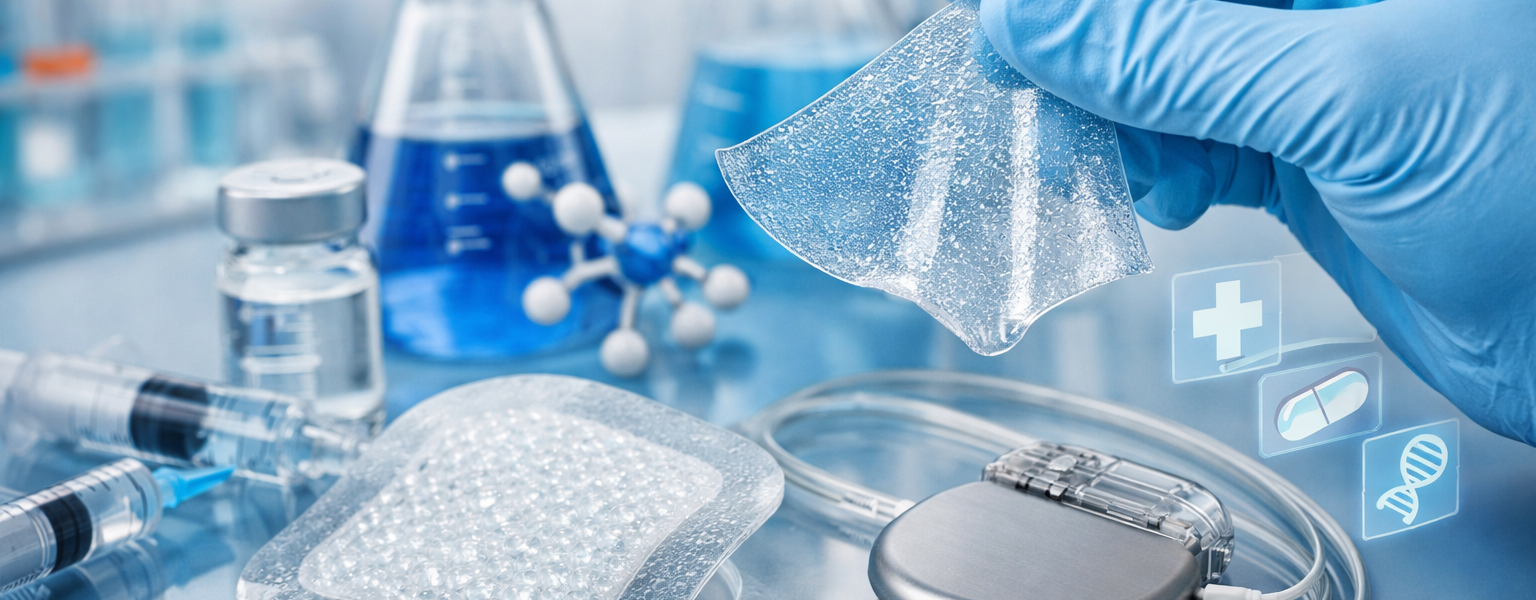
Hydrogels are polymer based materials designed to mimic the physical properties of human tissue. Their high water content allows them to remain soft, flexible, and breathable while maintaining structural integrity. These features make hydrogels ideal for medical applications such as wound care, burn treatment, transdermal drug delivery, tissue engineering, and implantable devices.
In healthcare environments, hydrogels must meet strict standards for sterility, consistency, and performance. Manufacturing processes are carefully engineered to ensure the final product behaves predictably when exposed to moisture, pressure, or biological environments. This precision is what separates medical grade hydrogels from industrial or cosmetic variants.
Core Materials Used in Hydrogel Manufacturing
The quality of a hydrogel begins with its raw materials. Common polymers used in hydrogel production include synthetic options such as polyvinyl alcohol and polyethylene glycol, as well as natural polymers like alginate, gelatin, and chitosan. Each material brings distinct properties related to elasticity, biodegradability, and compatibility with living tissue.
Additives such as crosslinking agents, plasticizers, and active pharmaceutical ingredients are introduced during production to enhance performance. In medical applications, all materials must be tested for safety and consistency, ensuring they meet regulatory expectations for patient use.
Key Manufacturing Methods and Processes
Several techniques are used in hydrogel manufacturing, depending on the intended application and required performance characteristics. Chemical crosslinking is one of the most common methods, where polymer chains are bonded using specific agents to form a stable network. Physical crosslinking, which relies on temperature changes or ionic interactions, is often preferred for applications requiring reduced chemical exposure.
Advanced manufacturing may also involve radiation induced polymerization, freeze thaw cycling, or solvent casting. Each method impacts the hydrogel’s strength, swelling capacity, and release profile. Manufacturers must carefully select and control these processes to achieve consistent outcomes at scale.
Automation and cleanroom environments are increasingly standard in modern production facilities. These controls reduce contamination risks and improve batch to batch consistency, which is critical for medical and pharmaceutical uses.
Quality Control and Regulatory Compliance
Medical hydrogels are subject to rigorous quality assurance protocols. Testing typically includes mechanical strength evaluation, absorption capacity analysis, sterility verification, and biocompatibility assessments. Documentation and traceability are essential, especially when products are intended for regulated markets.
Compliance with international standards such as ISO certifications and FDA guidelines is a defining factor for reputable manufacturers. These requirements ensure that hydrogels perform safely and effectively throughout their intended lifecycle. Working with experienced suppliers like R & D Medical Products helps healthcare providers and innovators maintain confidence in product reliability and regulatory readiness.
Applications Driving Innovation in Healthcare
Hydrogel technology continues to expand across multiple medical disciplines. In wound care, hydrogels provide a moist healing environment that accelerates tissue repair while reducing discomfort. In drug delivery, they enable controlled release of medications over time, improving therapeutic outcomes and patient compliance.
Hydrogels are also increasingly used in post surgical recovery products, wearable medical devices, and regenerative medicine. Their ability to conform to the body and interact safely with tissue makes them invaluable in personalized healthcare solutions. As demand grows, hydrogel manufacturing techniques are evolving to support customization, scalability, and sustainability.
Choosing the Right Manufacturing Partner
Selecting a hydrogel manufacturing partner requires careful evaluation. Experience in medical grade production, transparent quality systems, and the ability to support research and development are key considerations. Manufacturers that collaborate closely with healthcare innovators can adapt formulations and processes to meet specific clinical needs.
For organizations seeking dependable information and advanced medical solutions, resources available through platforms like https://topsoc.org/ provide valuable insights into emerging technologies and trusted industry practices. A knowledgeable partner not only delivers materials but also contributes expertise throughout the product lifecycle.
The Future of Hydrogel Manufacturing
Innovation in hydrogel manufacturing is accelerating as healthcare demands become more complex. Smart hydrogels capable of responding to temperature, pH, or biological signals are already under development. These materials promise new possibilities in diagnostics, targeted therapies, and minimally invasive treatments.
Sustainability is also shaping the future, with manufacturers exploring bio based polymers and environmentally responsible production methods. As technology advances, hydrogels will continue to bridge the gap between material science and patient centered care.
By understanding how hydrogels are manufactured and what standards define quality, healthcare professionals and organizations can make informed decisions that support safety, innovation, and long term success.
Frequently Asked Questions
What is hydrogel manufacturing used for in healthcare?
Hydrogel manufacturing supports the production of medical materials used in wound care, drug delivery systems, surgical recovery products, and implantable devices due to their biocompatibility and moisture retention.
Are medical hydrogels safe for long term use?
Yes, when produced under strict quality and regulatory standards, medical hydrogels are designed to be safe, stable, and effective for both short term and long term applications.
How do manufacturers ensure consistency in hydrogel products?
Consistency is achieved through controlled production environments, standardized formulations, automated processes, and extensive quality testing throughout manufacturing.
Can hydrogels be customized for specific medical needs?
Many manufacturers offer customized formulations that adjust thickness, absorption rate, and active ingredients to meet specific clinical or therapeutic requirements.
Why is choosing the right manufacturer important?
A reliable manufacturer ensures regulatory compliance, consistent quality, and access to technical expertise, all of which are critical for medical applications.